
Wobble Wars: Fixing the Most Annoying Ceiling Fan Issues
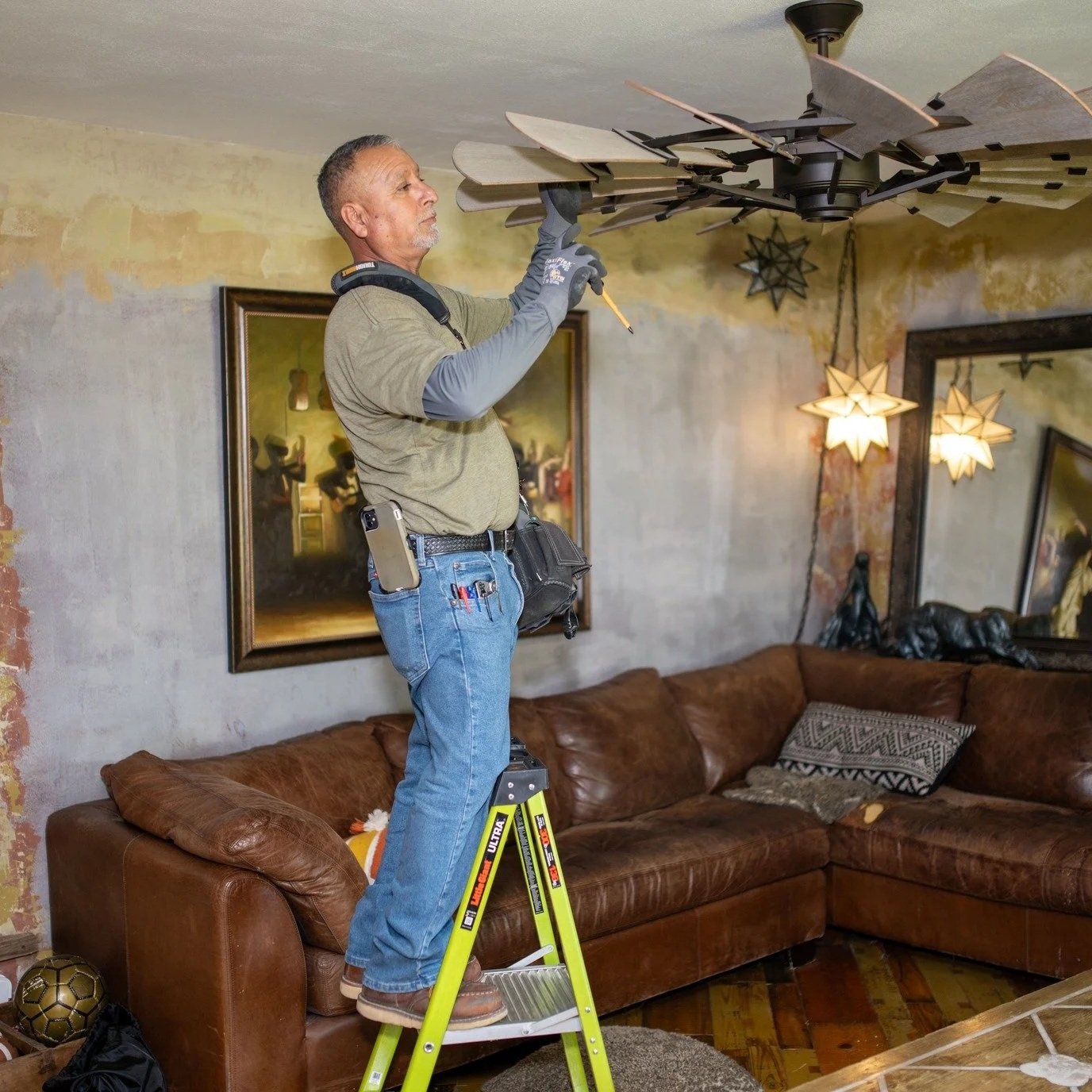
Professional ceiling fan repair turns those annoying issues into silent, stable, energy-saving comfort.
Ceiling fans are supposed to create a gentle breeze, not mild anxiety. If your fan makes a clinking sound every time it spins or rocks like it’s dancing to its own beat, you’re not alone. Wobbles, buzzes, squeaks, and slow speeds are all common complaints—and they don’t go away by ignoring them.
Professional ceiling fan repair turns those annoying issues into silent, stable, energy-saving comfort. Whether the fan’s behavior is mildly irritating or full-blown concerning, the right diagnosis and fix keep your ceiling from becoming a trouble zone.
The Dreaded Ceiling Fan Wobble
A ceiling fan wobble can turn a calm living room into a suspense thriller. While it might seem like a minor inconvenience, a fan that shakes, tilts, or vibrates can lead to long-term damage. Blades may wear down unevenly, screws can loosen, and ceiling mounts may crack under strain.
Fan wobble is usually caused by one or more of the following: unbalanced blades, improper mounting, warped blade arms, or a bent motor shaft. Professionals come equipped with balancing kits, angle gauges, and laser alignment tools to pinpoint the issue and stabilize the fan before it rattles itself free.
Blade pitch inconsistencies—often invisible to the untrained eye—can create airflow imbalances. Even something as small as a layer of dust on one blade or a warped arm from heat exposure can throw the entire fan off balance.
Unusual Noises That Mean Business
Fans should hum softly, not growl like an old refrigerator. Clicking, grinding, squealing, or buzzing sounds point to deeper problems than just annoyance. Often, those noises originate from loose screws, blade brackets, worn bearings, or motor issues.
A buzzing sound might mean improper voltage, while clicking often comes from misaligned parts. Grinding or squealing? That could signal the motor’s crying out for help. During a ceiling fan repair visit, technicians isolate the noise source, lubricate bearings when needed, and tighten or replace worn parts.
Older fans sometimes develop capacitor problems that affect the motor’s function. Instead of replacing the entire fixture, a professional can replace specific components and silence the fan without changing your ceiling aesthetic.
When The Speed Won’t Keep Up
Fans with speed issues often signal failing capacitors or faulty wall controls. If your fan only works on high or barely responds at all, the problem may lie in the electrical controls or the internal motor windings.
Speed issues aren’t always mechanical—they can also be electrical. Improper voltage, loose wire connections, or aging speed regulators are oft
en to blame. Fan repair specialists test continuity, inspect switch wiring, and replace bad capacitors with the right match—not just the closest one from a big box store.
Fixing the speed doesn’t just restore functionality—it also improves airflow efficiency and reduces noise. A fan stuck on one speed doesn’t circulate air properly and can even overheat.
Blade Damage You Might Not Notice Right Away
Blade damage can be sneaky. While a cracked or bent blade might look fine from below, it disrupts the balance and airflow. Heat from nearby light fixtures can warp certain blade materials, and humidity can cause swelling in wood or composite blades.
Professionals measure each blade’s height and angle, compare it to factory specs, and identify mismatches that might not be visible at a glance. In some cases, replacement blades can be matched and installed. In others, custom solutions or full-blade set replacements restore the fan to working condition.
A warped or imbalanced blade left unattended won’t just create noise—it stresses the motor, mount, and bracket over time.
Loose Mounting That Threatens To Shake Everything Loose
If your fan shifts at the ceiling joint or the entire unit tilts even slightly, the mounting bracket might be the culprit. Ceiling fan mounts must be installed in fan-rated electrical boxes, not standard lighting boxes. Anything less can lead to ceiling cracks, noise, or even structural failure.
During professional ceiling fan repair, technicians inspect the mount, box, and bracket for signs of wear, movement, or improper installation. Reinforcement or reinstallation into a proper junction box makes all the difference.
Tilted fans also indicate that the downrod or mounting canopy wasn’t installed with the correct angle adapter. Professionals have the tools to reset and anchor everything securely, even on vaulted or sloped ceilings.
Remote Control Confusion And Signal Dropouts
Modern ceiling fans often use wireless remotes, but when the remote stops working—or only works from specific angles—it’s more than just a battery issue. Interference from other wireless devices, damaged receivers, or outdated control modules can disrupt fan operation.
Professional ceiling fan repair includes diagnostics of the remote and receiver, signal testing, and replacement of outdated or malfunctioning modules. If your fan’s remote works intermittently or not at all, chances are the problem lies inside the canopy where the receiver is.
Technicians can replace the receiver, upgrade the controller, or hardwire the fan to work with wall switches, depending on your preference.
Shaky Downrods And The Wrong Length Choices
The downrod plays a big role in fan stability and performance. Too short, and the airflow suffers. Too long, and the fan may wobble or swing dangerously. Ceiling fans installed with the wrong downrod often behave erratically or appear unstable at medium and high speeds.
Professionals measure ceiling height, calculate optimal airflow zones, and install the correct downrod with proper threading and anchor points. They also secure the joint between the downrod and the motor housing using torque-specific fasteners that don’t loosen over time.
Shaky downrods aren’t just irritating—they’re safety hazards. A fan that swings on its axis or drifts during use may be signaling a deeper mounting issue.
Lighting Problems That Aren’t Just About The Bulbs
Ceiling fans with integrated lighting often flicker or dim. The problem may not lie in the bulb. Loose sockets, worn pull chains, or failed integrated LED modules can all interfere with performance.
Some homes also have incompatible dimmer switches or voltage irregularities that affect how the fan’s lights respond. A professional fan repair technician can diagnose and resolve lighting flickers by replacing sockets, installing compatible switches, or rewiring faulty connections.
Integrated LED lights have their own circuit boards and drivers. Replacing just the bulb won’t fix a failing module. Technicians carry compatible components or order direct replacements for a safe, flicker-free solution.
Fan Direction Problems That Leave Rooms Feeling Off
Ceiling fans should rotate counterclockwise in summer and clockwise in winter. If the direction switch is stuck or reversing the fan doesn’t change the airflow, the issue may lie inside the motor housing or in the reverse control wiring.
Professional ceiling fan repair includes inspecting the directional switch, checking polarity, and correcting any wiring errors. Some fans use a remote or wall control for directional changes, and if the system isn’t communicating properly, the fan may not respond.
Correcting direction settings and control signals can restore effective cooling or heat circulation. Plus, it helps the fan run more efficiently year-round.
Ceiling Fan Repair For Outdoor Units
Outdoor ceiling fans take a beating from humidity, temperature shifts, and even insects. Bugs love to crawl into the motor housing, and moisture buildup can corrode internal components. If your patio fan starts sounding like a diesel truck or won’t start at all, chances are the internal wiring or motor assembly is compromised.
Professionals performing ceiling fan repair for outdoor models use weather-rated replacement parts, sealed bearings, and corrosion-resistant hardware. They’ll also check the wiring route to confirm moisture hasn’t infiltrated the junction box or conduit.
A ceiling fan repair specialist can often bring an outdoor fan back to life without a full replacement—especially if the issue lies in wiring or corrosion rather than the motor.
Why Repairs Often Beat Replacement
Not every broken fan needs to be thrown out. Many ceiling fans, especially high-end or vintage models, benefit from professional repair rather than a full replacement. Repairing can preserve aesthetic style, save money, and reduce landfill waste.
Professionals evaluate the motor, control systems, blades, and mounts before recommending any replacement. Many ceiling fan issues come down to one or two worn components that someone with the right tools and experience easily addresses.
Keeping a beloved fan in working order isn’t just possible—it’s often the smarter call. Plus, you get to enjoy the comfort and style without picking out a whole new fixture or patching your ceiling.
Quiet, Balanced, And Back In Action
A properly repaired ceiling fan doesn’t call attention to itself. It spins silently, moves air efficiently, and looks like it’s always belonged. Professional ceiling fan repair keeps your space comfortable without the chaos, delivering smooth spins, silent motors, and years of additional service life.
Apollo Electric specializes in outdoor and landscape lighting installation, ceiling fan and light fixture installation, pool and spa electrician wiring, and electrical safety inspections and code compliance. Our licensed electricians deliver personalized solutions to meet the specific electrical needs of residential and commercial clients in the Phoenix area. Get in touch with our team today.